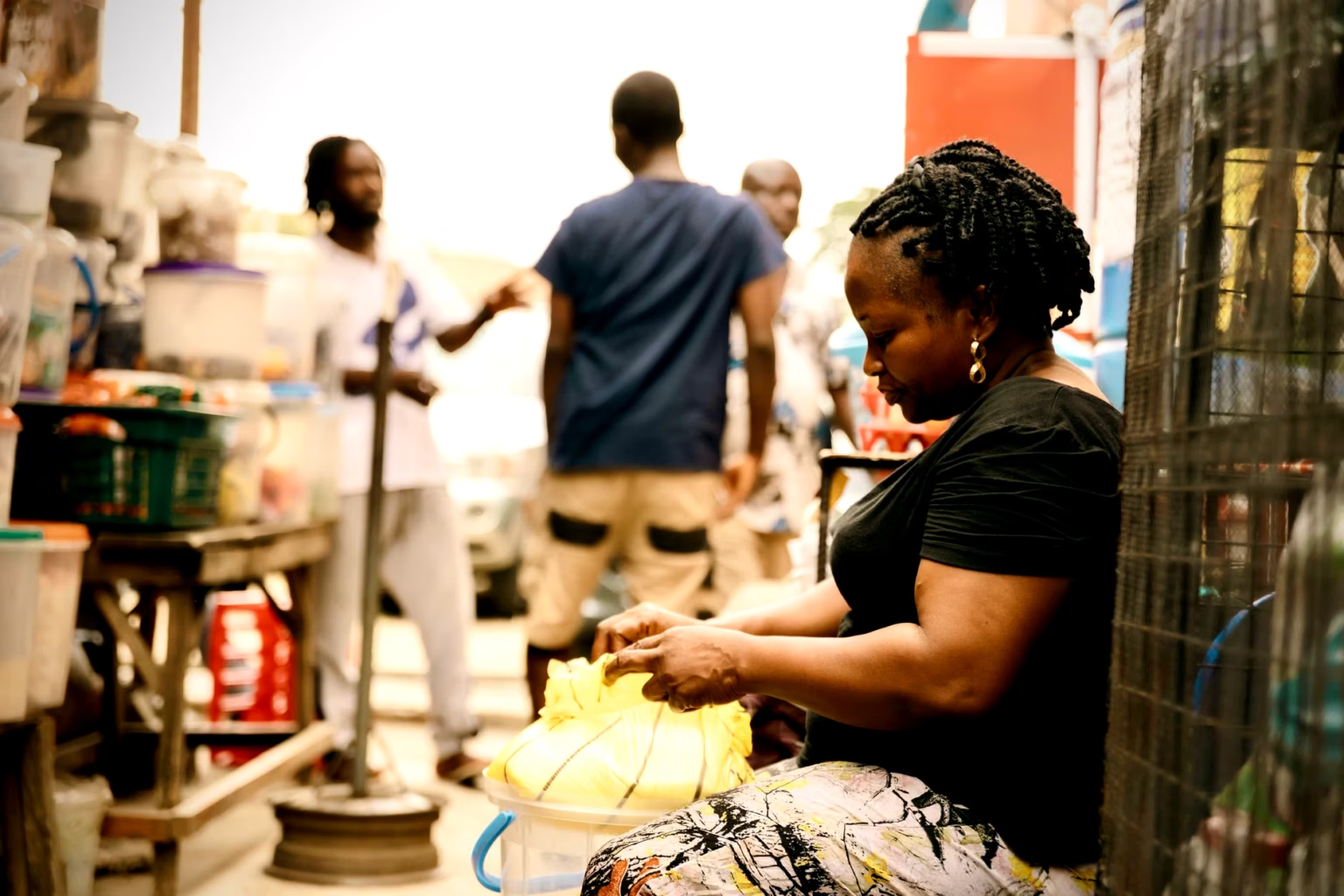
Women control more than one-third of Ghana’s businesses and lead 44.6 percent of the country’s micro, small, and medium enterprises, yet the gender gap in formal financial account ownership has widened from 8 to 11 percent over the past five years. A $42 billion continental financing gap continues to lock Ghanaian women out of the credit they need to expand operations, even as their economic contribution remains visibly central to daily commerce and household survival.
The problem is not female participation in the economy. According to the Mastercard Index of Women Entrepreneurs, Ghana ranks third globally for women’s business ownership concentration at 37.2 percent. The challenge is that fintech platforms and traditional banks have built financial products designed around formal salary schedules, collateral requirements, and income patterns that do not reflect how most Ghanaian women actually earn and manage money.
Seasonal traders, market vendors, female farmers, and entrepreneurs whose expenses and revenues spike unpredictably across the year cannot fit into rigid monthly repayment schedules. Without access to formal credit, they rely on informal savings groups called susu, rotating credit associations that have operated for generations but offer no security guarantees, interest returns, or digital record-keeping. The fintech sector has treated susu as a problem to disrupt rather than as an existing trust infrastructure to build upon.

Cash-Flow Lending Could Unlock Millions in Credit Without Reckless Risk
One practical solution already working in Kenya and East Africa is cash-flow-based lending that uses mobile money transaction history as an alternative to formal collateral. Banks and fintechs can assess repayment capacity by analyzing the rhythms and patterns of a woman’s existing digital transactions, eliminating the need for land titles, equipment pledges, or co-signers that most informal workers cannot produce.
Seasonal credit lines aligned with real income patterns would resolve much of the mismatch. Female founders and business owners face persistent funding gaps partly because traditional lenders struggle to understand non-linear income models. A harvest-cycle credit product for female farmers, a market-day cash flow line for traders, and a school-term financing option for entrepreneurs whose costs spike during term time would transform access without exposing lenders to unnecessary risk.
The financial engineering is neither complex nor expensive. Ghana has the mobile money infrastructure, regulatory framework, and competitive fintech ecosystem to implement these products at scale immediately. What is missing is intentional product design that starts from how Ghanaian women actually work, not from how global fintech templates assume people should work.
Formal Savings Should Build On Susu, Not Replace It
Ghana’s informal savings economy has been sophisticated for generations. Susu collectors and rotating savings groups hold social trust worth far more than any advertising campaign could generate. Yet fintech firms have launched digital wallets and savings apps designed as disruption, explicitly trying to migrate women away from susu rather than enhance it.
A better strategy would digitize susu itself. A platform that lets women continue their traditional rotating savings behaviours while adding security, digital record-keeping, small interest returns, and instant mobile money disbursement would grow adoption far faster than any imported model. The existing social infrastructure is the competitive advantage. Fintechs that recognize this can partner with susu collectors as distribution channels and service providers rather than treating them as competitors.
Insurance Gaps Leave Millions Exposed to Predictable Shocks
Women in informal work face concentrated, known risks that insurers can price and underwrite efficiently. Market traders fear fire outbreaks; farmers fear crop failure and livestock loss; caterers and hairdressers fear health emergencies that force them to pause income. Ghana’s insurance penetration sits at roughly one percent of GDP, and women in informal sectors represent one of the continent’s largest untapped market opportunities.
Micro-insurance products tailored for market trading, agriculture, catering, and hairdressing would fill an urgent gap. Coverage should include shock events tied to real sectoral risks, with claims paid rapidly through mobile money and communicated in local languages. Ghana’s insurance regulators have the tools to enable this. What is missing is insurer willingness to design products that fit real lives rather than wait for informal workers to conform to formal insurance assumptions.
Language and Localization Remain Basic Barriers
Every meaningful touchpoint in a fintech or banking product should be available in Twi, Ga, Ewe, Dagbani, Hausa, Frafra, Kusaal, and other languages that Ghanaian women speak at home and in market. Customer service should operate in these languages. Loan applications, savings documentation, insurance terms, and claims processes should be comprehensible without translation intermediaries.
This is not a cultural accommodation or a sympathy requirement. It is basic product design. If a financial service is meant to serve a customer, it must communicate in a language that customer understands. Ghana’s fintech and banking sectors have the scale and resources to localize every layer of the customer journey. The delay reveals that these sectors have optimized for formal workers, not for the women who actually power Ghana’s economy.
The fix is neither mysterious nor expensive, and every stakeholder in Ghana’s financial ecosystem can begin to act now. Banks can design seasonal credit. Fintechs can partner with susu. Insurers can launch micro-products. Regulators can remove unnecessary barriers. None of these require new technology or imported models. They require product strategy built around real income patterns, existing trust networks, and the actual languages and risks of Ghanaian women. Until the fintech sector does this work, the paradox will persist: women powering the economy, yet locked out of the formal credit they need to grow it.