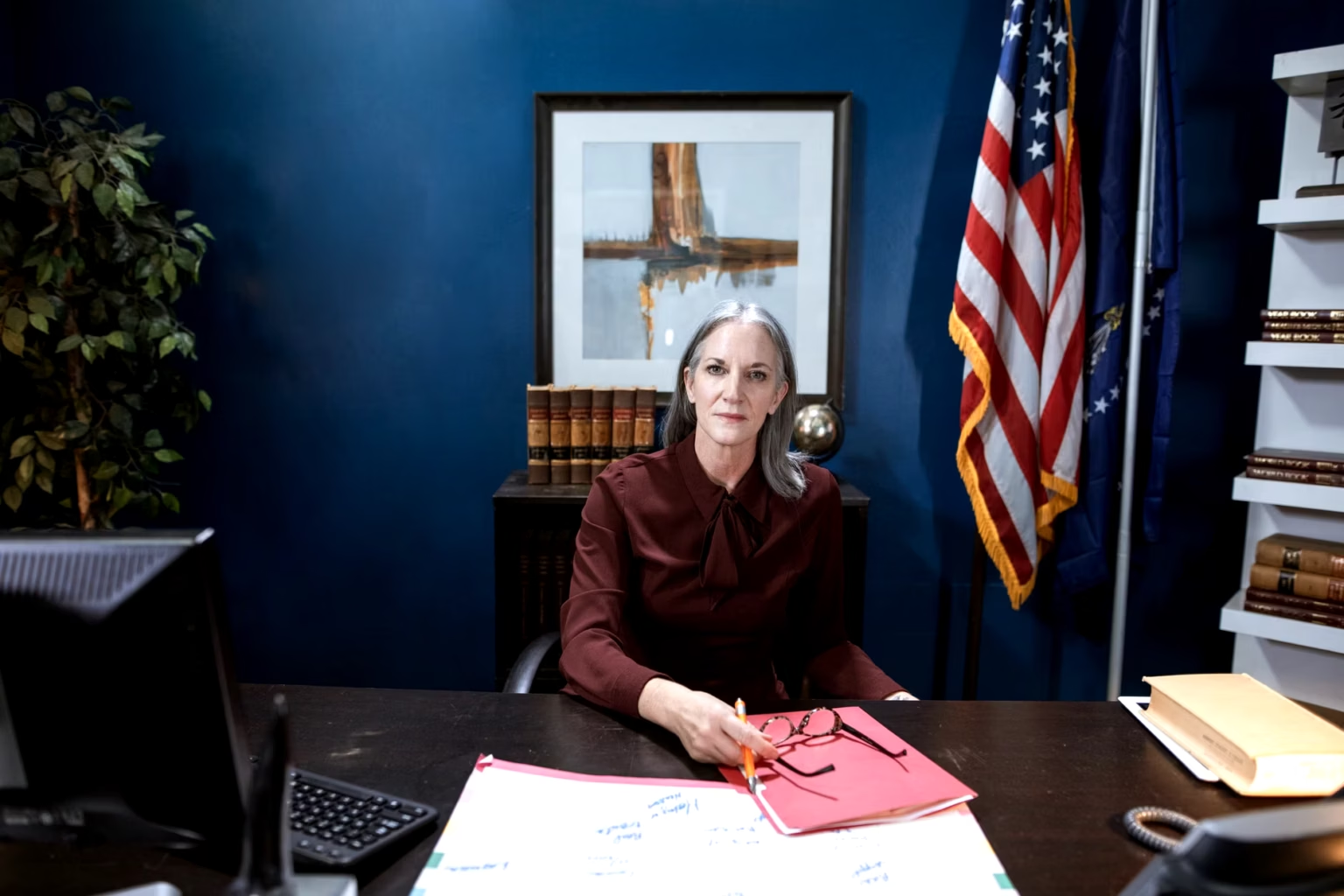
Michele Mixner DeWitt made history in May when Williamsburg City Council unanimously appointed her as the city’s first woman to serve as city manager since the municipality adopted the council-manager form of government in 1932. The appointment culminates a 20-year tenure at the city, where DeWitt held roles as economic development director, assistant city manager, and deputy city manager before stepping into the top post following the sudden resignation of her predecessor.
DeWitt’s elevation to city manager represents a rare moment in regional governance. Across Hampton Roads’ major cities, only two women currently lead local governments: DeWitt and Hampton City Manager Mary Bunting, who has held her position since 2010. The scarcity underscores a broader pattern in American municipal leadership, where women remain significantly underrepresented in chief executive roles despite decades of workforce diversification.
The 56-year-old manager said she is “honored and proud of the milestone” but framed her appointment in functional rather than symbolic terms. “Not just as a woman,” DeWitt said, “but as a person in this role in this wonderful community.” Her pragmatic stance reflects a deliberate approach to leadership that prioritizes service over narrative.

Building Leadership Through Three Decades of Firsts
DeWitt’s path to city manager status follows a pattern of sequential professional firsts. She served as Middlesex County’s first environmental planner and held the distinction of being the first Economic Development director for both West Point and Williamsburg. Each role built institutional knowledge and community relationships that positioned her to manage complex municipal operations.
The appointment came with immediate operational demands. When Andrew Trivette departed after 10 years as city manager, DeWitt assumed the interim role and confronted a critical budget deadline. Working with staff and council members, she completed a 430-page fiscal year 2027 budget totaling $116.54 million. City Council adopted the budget on the same day DeWitt received her permanent appointment, demonstrating both the urgency of her transition and the confidence of municipal leadership in her capability.
Since taking the post several months ago, DeWitt has focused on maintaining Williamsburg’s relationships with citizens while advancing current projects, including the Virginia Capital Trail and the African American Heritage Trail. Her tenure reflects a continuity-focused management style rather than a disruptive reform agenda-a choice that may limit her visibility but reinforces institutional stability during transition.
A Career Built on Public Service
DeWitt’s professional orientation toward public administration was shaped early by family example. Born in 1969 in Key West, Florida, she grew up the daughter of a naval officer who completed two tours in Vietnam. Her father’s military service required frequent relocation-the family moved to Newport, Rhode Island; Monterey, California; Charleston, South Carolina; and eventually Virginia. This background instilled what she describes as a commitment to service that transcends individual advancement.
Her move into municipal management aligns with a broader demographic shift in American local government, where younger women have begun filling management and deputy positions at rates that exceed their representation in the top executive tier. The gap between middle management and executive roles suggests that pipeline development-not capability-remains the structural constraint limiting women’s advancement to city manager positions.
Regional Context and Broader Leadership Patterns
The rarity of female city managers in Hampton Roads reflects national patterns. Women lead fewer than one in five city manager positions across the United States, despite representing nearly half of the municipal workforce at lower levels. Research on municipal governance has identified several barriers, including historical exclusion from informal leadership networks, selective recruitment practices, and lower appointment rates following recruitment processes that appear neutral but advantage candidates from majority-demographic backgrounds.
DeWitt’s appointment does not resolve these structural barriers, but it does establish a precedent within Williamsburg and demonstrates that municipal councils are willing to advance female candidates when they possess the requisite experience and institutional tenure. Her success may increase visibility of women in executive municipal roles, potentially influencing recruitment and retention patterns in comparable jurisdictions.
The sustainability of this leadership model depends partly on whether Williamsburg and other municipalities intentionally develop diverse talent pipelines for future appointments. One woman in a single role, however accomplished, does not constitute systemic change. The presence of Mary Bunting as a peer leader in Hampton suggests that regional institutional factors may support female advancement more readily than some other metropolitan areas, though the sample size remains too small for conclusive analysis.
What Comes Next
DeWitt’s focus on specific projects and community relationships suggests a tenure oriented toward substantive municipal outcomes rather than symbolic leadership. This approach may limit public attention to her role as a gender milestone, but it grounds her authority in competence and results-a practical strategy that sidesteps distraction while allowing her work to speak for itself.
The question for Williamsburg and comparable municipalities is whether DeWitt’s appointment will influence recruitment and development strategies for future management positions. If her success remains isolated, it becomes a notable exception rather than evidence of systemic change. If it catalyzes intentional expansion of female representation in deputy and assistant roles, it signals a genuine shift in how local governments cultivate leadership talent.
Frequently asked questions
Who is Michele Mixner DeWitt?
Michele Mixner DeWitt, 56, is Williamsburg's newly appointed city manager and the first woman to hold the position since the city adopted council-manager government in 1932. She spent 20 years with the city in roles including economic development director, assistant city manager, and deputy city manager.
When was DeWitt appointed and what was the timeline?
Williamsburg City Council unanimously appointed DeWitt as city manager in May 2026 following the sudden resignation of Andrew Trivette after 10 years in the role. She assumed the interim position immediately and was made permanent while overseeing a critical budget deadline.
How rare is female city manager leadership in Hampton Roads?
Female city manager representation is extremely limited in Hampton Roads. Only two women lead major cities in the region: DeWitt in Williamsburg and Mary Bunting in Hampton, who has served since 2010.
What are DeWitt's priorities as city manager?
DeWitt has emphasized maintaining positive relationships with citizens and advancing current projects including the Virginia Capital Trail and the African American Heritage Trail. She managed the city's $116.54 million fiscal year 2027 budget as an immediate priority upon appointment.
What was DeWitt's background before becoming city manager?
DeWitt was born in Key West, Florida, the daughter of a Navy officer who served two tours in Vietnam. She previously served as Middlesex County's first environmental planner and as economic development director for West Point and Williamsburg before her municipal management roles.