
STEM training linked to higher employment and earnings for young women in Kenya also exposed obstacles beyond the classroom. Researchers reported stronger outcomes for participants, alongside certification costs, discrimination and harassment.
The study found 63 per cent of programme participants were employed. That compared with 48 per cent of unsuccessful applicants and 52 per cent of comparable women who did not apply.
STEM Training Linked To Higher Earnings
Dr Phyllis Machio and Dr Bernadette Wanjala co-authored the research, presented at a Nairobi policy briefing on Monday. The study is titled ‘Scaling STEM training can improve young women’s employment in Kenya.’
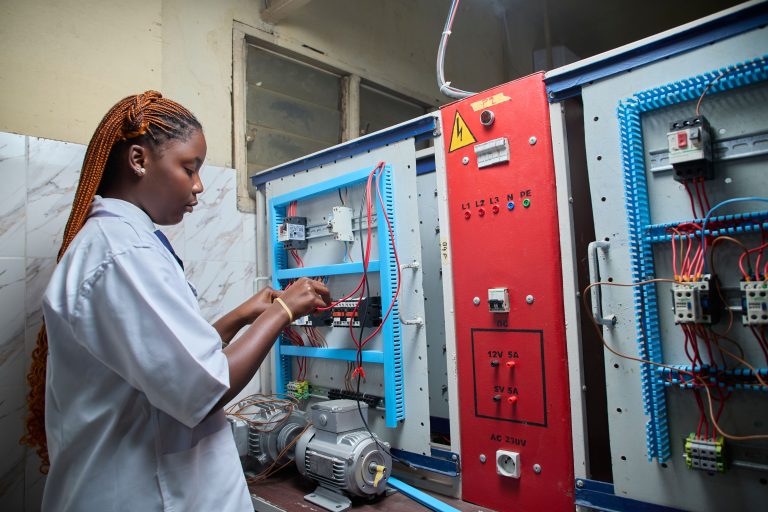
Econometric analysis estimated employment likelihood increased by up to 26 per cent against one comparison group. Against the other group, the estimated increase was 18 per cent.
The study reports STEM training linked to monthly earnings estimated to be 22 per cent higher, according to The Star’s report. These are the study’s estimates, alongside its reported employment shares.
“These findings show us what is possible when young women are given the opportunity to develop technical skills, confidence and practical workplace experience,” Dr Machio said.
The STEM Education for Empowerment Project, or STEEP, is a four-year initiative supporting out-of-school adolescent girls from vulnerable backgrounds. It combines technical training with life skills, mentorship and work-based learning.

Three cohorts trained between February 2024 and June 2025. Training took place in Kakamega county, Kenyenya in Kisii county and Kisumu county.
Other locations were Mathira in Nyeri county, Sega in Siaya county and Sero in Homa Bay county. The six locations offered market-relevant technical pathways.
Certification Barriers Remain After Training
The pathways included food and beverage production and service, electrical installation and wiring, and plumbing and pipe fitting. Solar PV and electrical training also featured.
Dr Machio described participants’ excitement about working as electricians and plumbers. Some participants said those occupations challenged expectations about jobs women could do.
“I’m happy because I’m a girl and I’m doing plumbing. Some people say that girls cannot be plumbers. But this gives me added joy,” one participant said.
The study nevertheless found that training alone did not eliminate employment barriers. Participants identified short training duration, a lack of formal certification and NITA examination fees as challenges.
Some could not secure opportunities with formal companies because they lacked required certification. Others reported discrimination and harassment in male-dominated workplaces.
Separate Her Forward coverage examines workplace recognition for women. That employer-focused report concerns a different setting from the Kenyan training study.
Internships Bridge Training And Employment
Internships provided another route from training into employment. Researchers found practical workplace experience built confidence and, in some cases, led directly to jobs.
Dennis Muchiri represented CAP Youth Empowerment Institute, the programme’s implementing organisation. He said the approach combines skills, knowledge and adjustments in attitude.
Muchiri urged participants in the policy discussion to consider how the evidence would affect future programmes. The briefing brought together researchers, policymakers, government officials and development partners.
Women account for only 38 per cent of STEM enrolment in Kenya’s TVET institutions, the policy brief says. Researchers recommend extending the model to marginalised counties.
They also recommend structured life-skills training and female mentorship in TVET STEM programmes. Stronger public-private partnerships through the National Industrial Training Authority would provide internships linked to employment.
The recommendations include stronger workplace safeguards for women entering STEM careers. Related coverage examines separate workplace gender balance initiatives and African women’s financing barriers.
The Government of Canada through Global Affairs Canada and the Barrett Family Foundation funded the study. Humber Polytechnic’s International Development Institute led it, with CAP YEI implementing the programme in Kenya.
The Partnership for Economic Policy supported the research through its Learning and Knowledge Management Project, funded by Global Affairs Canada. With STEM training linked to stronger outcomes, researchers recommend internships, certification pathways and safeguards alongside expanded training.