The Micronutrient Crisis Is Real and Tech Alone Won’t Fix It
Please select listing to show.
In This Article
Article Contents
When we talk about the global food crisis, the conversation almost always gravitates toward hunger in the traditional sense: not enough calories reaching enough people. But a growing number of researchers, entrepreneurs, and public health advocates are pushing back on that framing. They argue the deeper, more pervasive problem is a micronutrient crisis, one that affects not just the world’s poorest populations but also well-fed consumers in wealthy nations. And the solutions being proposed, from AI-driven vertical farming to tax incentives for agricultural startups, reveal just how tangled the path forward really is.
Sam Bertram, co-founder and CEO of Arizona-based agriculture startup OnePointOne, is among those making the case that caloric sufficiency is a misleading benchmark. His company is building vertical farming operations that use artificial intelligence to optimize the nutrient density of crops, not just their yield. The premise is straightforward: even people who eat enough food are frequently deficient in essential vitamins and minerals. The World Health Organization estimates that more than two billion people globally suffer from micronutrient deficiencies, a condition sometimes called “hidden hunger” because it doesn’t always look like starvation.
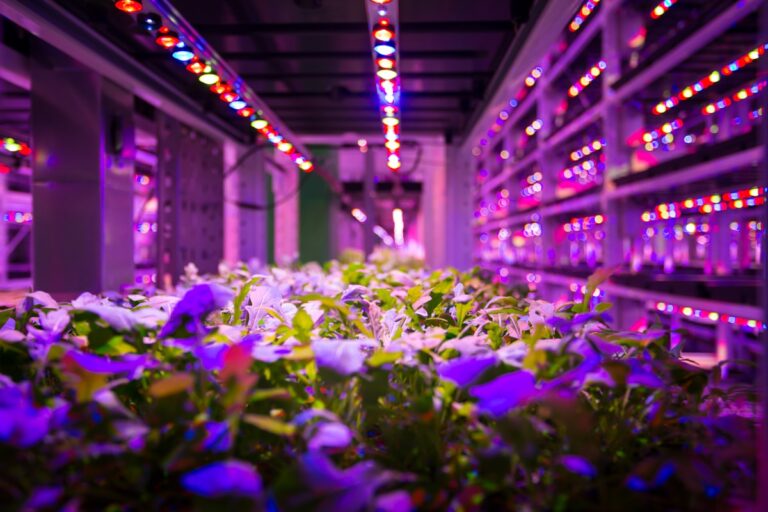
AI-powered agriculture aims to track and optimize micronutrient content in real time
Why Vertical Farming Keeps Getting Pitched as the Answer
Vertical farming has been both celebrated and criticized over the past decade. Proponents say it eliminates the unpredictability of weather, reduces water usage by up to 95%, and allows year-round production in controlled environments. Critics counter that the energy costs are enormous, the crop variety is limited mostly to leafy greens, and the economics remain brutal. Several high-profile companies in the space, including AppHarvest and AeroFarms, have filed for bankruptcy in recent years.
What makes OnePointOne’s pitch slightly different is the focus on micronutrient optimization rather than sheer volume. By controlling every variable, from light spectrum to nutrient solution, the company claims it can grow produce that is measurably more nutrient-dense than what conventional agriculture delivers. Whether this can work at a price point that matters to anyone beyond affluent health-conscious consumers is the question nobody in the industry has convincingly answered yet. A 2023 study published in Nature Food found that while controlled environment agriculture shows promise for nutrient-dense production, scaling it affordably remains a significant barrier.
Tax policy and regulatory burdens shape which agricultural startups survive and which don't
The Policy Side Nobody Wants to Talk About
Building the future of food doesn’t happen in a vacuum. It happens inside a regulatory and tax environment that can either nurture or strangle young companies. This reality was on display recently in Wisconsin, where Small Business Administration Administrator Kelly Loeffler toured the state to promote the permanent extension of the 20% small business tax deduction. Wisconsin is home to roughly 497,000 small business owners, many of whom operate in agriculture-adjacent industries.
The deduction is meaningful, but entrepreneurs in the state say it only scratches the surface of the challenges they face. Rising costs, workforce shortages, and regulatory complexity continue to weigh on small operations. For startups in capital-intensive sectors like vertical farming, where the upfront infrastructure costs can run into the tens of millions, a tax deduction on pass-through income is helpful but hardly transformative. The SBA’s own data shows that access to capital remains the single biggest constraint for small businesses trying to scale.
Connecting the Dots
There is a gap between the ambition of companies like OnePointOne and the structural realities that determine whether such ventures survive long enough to matter. AI-optimized vertical farms growing nutrient-dense food sound like the future. But the future requires surviving the present, which means navigating tax codes, securing financing, finding skilled labor, and competing against a conventional agriculture system that, for all its nutritional shortcomings, still produces calories at a fraction of the cost.
The promise of micronutrient-dense food hinges on whether startups can make it affordable
The micronutrient crisis is real, and it deserves more attention than it gets. But solving it will take more than clever technology. It will require policy environments that don’t just offer tax breaks but actively reduce the friction for innovative agricultural businesses to scale. Until those two sides of the equation, the technological and the structural, start working in concert, the promise of AI-driven nutrition will remain exactly that: a promise.