
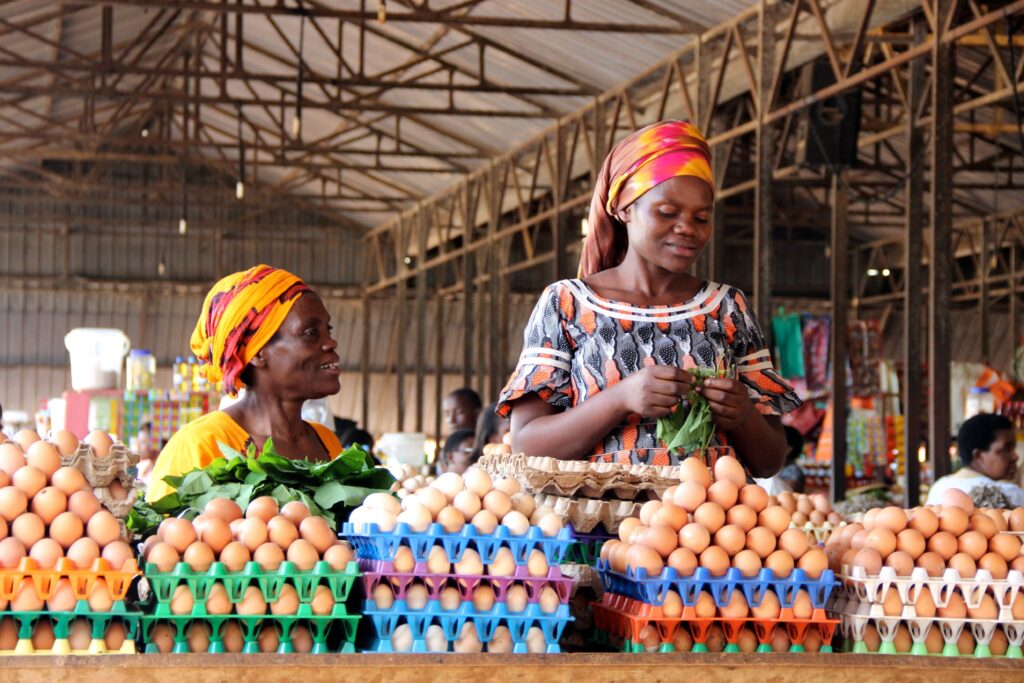
The African Development Bank Group has approved a $61 million financing package aimed at expanding credit access for women-owned and women-led businesses in Nigeria. Announced in May 2026, the package is one of the bank’s most significant gender-focused financial interventions in the country in recent years, and it arrives at a moment when the gap between what women entrepreneurs need and what they can actually borrow remains staggeringly wide.
The question is whether a blended finance approach, channeled through Nigeria’s existing commercial and microfinance banking infrastructure, can make a meaningful dent in a problem that has resisted countless prior interventions across the continent.

How The Money Breaks Down
The $61 million package is structured as three separate instruments, each designed to address a different layer of the financing problem. The largest component is a $50 million gender-focused line of credit intended to increase direct lending to women-owned and women-led businesses through the Development Bank of Nigeria (DBN). On top of that, an $8 million concessional facility under the Agri-Food SME Catalytic Financing Mechanism targets agricultural enterprises and value-chain development. Finally, a $3 million grant under the Affirmative Finance Action for Women in Africa (AFAWA) initiative, funded by the Women Entrepreneurs Finance Initiative (We-Fi), provides technical assistance and partial credit guarantees.
More than 95 percent of the total financing is earmarked specifically for women-owned and women-led small and medium enterprises. That level of targeting is notable. Many gender-lens finance programs reserve a much smaller share for women borrowers, often diluting the impact by the time funds reach the ground level.
The Scale Of The Problem
Africa’s gender financing gap is estimated at roughly $42 billion, according to AfDB figures. In Nigeria specifically, women entrepreneurs face compounding barriers: collateral requirements they cannot meet, bias in lending decisions, limited financial literacy support, and an overall banking system that has historically treated women-led MSMEs as high-risk, low-priority borrowers.
Research from the International Finance Corporation has consistently shown that women-led SMEs in Sub-Saharan Africa are more likely to be credit-constrained than their male counterparts, even when controlling for firm size and sector. The problem is not a lack of viable businesses. It is a structural mismatch between the way financial institutions assess risk and the realities of how women operate enterprises across the continent.
Why Blended Finance Matters Here
The package’s blended structure, combining long-term capital, concessional resources, partial credit guarantees, and technical assistance, is designed to lower the perceived risk for participating financial institutions. In theory, the credit guarantees reduce the downside for banks willing to lend to women entrepreneurs who lack traditional collateral. The technical assistance component helps both the borrowers and the lenders build capacity.
This approach has gained traction across development finance in recent years. The logic is straightforward: if commercial banks see women-led MSMEs as too risky, then de-risking the loans through guarantees and concessional pricing should shift behavior. Whether that behavioral shift outlasts the subsidy is the harder question, and one that previous blended finance programs have struggled to answer definitively.
Agriculture And Clean Energy As Priority Sectors
The focus on agriculture is particularly relevant for Nigeria, where women make up a significant share of the agricultural workforce but own a fraction of the land and capital. The $8 million concessional facility targeting agri-food SMEs could help women move beyond subsistence farming into processing, distribution, and export, where margins are higher and growth potential is real.
Clean energy and healthcare are also named as priority sectors. These are areas where Nigeria faces enormous demand-supply gaps and where women-led enterprises are increasingly active, from solar distribution networks to community health clinics. Directing capital toward these sectors has the dual benefit of supporting women’s economic participation while addressing broader development needs.
The Execution Challenge
The package will be distributed through DBN’s existing network of participating commercial and microfinance institutions. That means the money’s actual impact depends heavily on the willingness and capacity of those intermediary banks to identify, assess, and serve women borrowers. Past experience across Africa suggests that without strong monitoring and accountability mechanisms, gender-targeted lending mandates can be diluted at the last mile.
Nigeria’s microfinance sector, while extensive, faces its own challenges with liquidity, governance, and loan recovery. The technical assistance grant funded through We-Fi is supposed to address some of these capacity gaps, but $3 million is modest relative to the scale of the problem.
Still, the package represents a meaningful step. If even a fraction of the $61 million reaches women entrepreneurs who would otherwise be locked out of formal credit, the downstream effects on employment, household income, and local economic activity could be substantial. The real test will be in the data that emerges over the next two to three years: how many women actually received loans, at what terms, and with what outcomes. That is where the difference between a well-designed program and a well-executed one becomes clear.