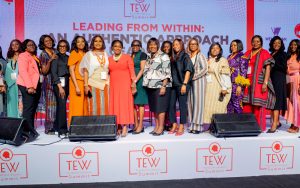
Across corporate and academic settings globally, structured executive leadership development programs have moved beyond traditional skills training to emphasize the intergenerational knowledge transfer and professional networks that define career advancement for women in senior roles. Recent program completions in Nigeria, the Solomon Islands, and the United States reveal a consistent pattern: participants report that peer relationships and mentorship ecosystems, not classroom instruction alone, deliver the most lasting career value. Related coverage: women leaders.
The WIN 3 Mentoring Programme, the highest tier of Women in Successful Careers’ (WISCAR) mentoring framework in Nigeria, graduated eleven senior management professionals this year. Delivered virtually over three months, the program targets accomplished professionals preparing for C-Suite and executive board roles across finance, professional services, technology, and telecommunications. The curriculum combines leadership simulations, peer learning sessions, and focused development modules designed to strengthen executive presence and strategic thinking. However, the standout element remains the structured engagement with board-level mentors from diverse industries and the ecosystem of advocates built during the program cycle. Related coverage: Nigerian Women Entrepreneurs Outpace Regional Averages at 83 Percent Identification Rate.
WISCAR founder Amina Oyagbola emphasized this intentional design. “When I founded WISCAR, the goal was to move mentoring beyond informal conversations into something structured and transformational,” she said. “We wanted to create a system where successful professionals could deliberately invest in the next generation, with clear guidance for both mentors and mentees.” The program’s speed-mentoring sessions and rotating mentor assignments ensure participants gain exposure across multiple industries and leadership perspectives, addressing a persistent barrier for women seeking C-level advancement. Related coverage: Women Entrepreneurs.

In the Solomon Islands, the Women in Executive Leadership Solomon Islands (WELSI) program delivered its sixth cohort earlier this year, with twenty-five women completing the four-day intensive program. Participants drawn from private sector, state-owned enterprises, and public sector agencies reported that the network they built proved more valuable than individual skill modules. Christina Palusi, Manager of Key Accounts at Our Telekom, noted that engagement with experienced guest speakers, facilitators, and peer professionals created a professional ecosystem she could rely on for ongoing career support.
Freda Tamu, who has worked as Cash Power Administrator at Solomon Power for a decade, articulated a critical insight: the program taught her the importance of a structured support system comprising a coach, mentor, and sponsor. “It’s important to have this support system which will help and support in the progression of your career as a woman,” she said. This emphasis on formalizing mentorship relationships addresses a documented gap in women’s advancement, where informal sponsorship networks have historically favored male professionals.
Similarly, the University of Kentucky’s Women’s Executive Leadership Development (WELD) program reports that the relationships built among cohort members often extend far beyond the program’s eight-month curriculum. The program, which engages approximately 24 faculty and staff annually through two two-day retreats and monthly meetings covering budgeting, strategic planning, and crisis management, has become as much about community-building as technical skills development. Jennifer Bird-Pollan, associate dean of academic affairs and director of WELD, stated: “The relationships that the WELD cohort build among themselves last well beyond the end point of the program, and the UK community is stronger because of the trust and respect that are established during those months together.”
This shift toward network-centric leadership development reflects broader challenges women face in ascending to executive ranks. Research indicates that women leaders consolidate wealth and operational control in certain sectors, yet structural barriers persist across industries. Women face documented pay disparities, rampant sexism, and the compounded pressure of managing career advancement alongside family responsibilities. At the Community College of Denver, where an all-female executive leadership team now operates, President Marielena DeSanctis inherited a female-majority leadership structure and has continued hiring women into vacant senior positions. While she characterizes the outcome as coincidental rather than purposeful, her experience underscores that women-led hiring decisions can accelerate female representation in executive roles.
The emphasis on mentorship and sponsorship reflects data showing that women are less likely than men to benefit from informal career guidance and advocacy. A Gallup survey found that 28 percent of women in academia believe they have been passed over for promotion based on gender. Many female leaders have earned advanced degrees while working full-time and managing household responsibilities, a parallel path rarely required of male peers. Once hired into senior roles, women often face assumptions that they were selected as diversity hires rather than merit-based appointments, a perception that mentorship networks and peer validation can help counteract.
Program designers increasingly recognize that formal mentorship structures address this disparity. Rather than leaving sponsorship to chance or informal networks, WISCAR, WELSI, and WELD all create deliberate spaces for mentors and mentees to engage. The rotation of mentors, exposure to multiple industries, and peer cohort support build the diverse professional ecosystem that research suggests accelerates women’s advancement to executive roles. These programs signal a maturation in how institutions approach leadership development: not as individual skill-building, but as ecosystem cultivation designed to ensure women have access to the networks that have historically propelled men into board rooms and C-suites.
As more organizations adopt this mentorship-intensive model, the question shifts from whether women can excel in executive roles to whether systemic barriers to sponsorship and network access can be deliberately dismantled. Early evidence from multiple continents suggests that structured, intergenerational mentorship programs help answer that question affirmatively, provided the programs prioritize relationship-building alongside technical instruction.
Source material included WISCAR inducts 11 senior professionals into executive leadership pipeline.
Source material included Women value ‘network’ gained through WELSI’s executive leadership training.
Frequently asked questions
What is the WIN 3 Mentoring Programme and who founded WISCAR?
The WIN 3 Mentoring Programme is the highest tier of Women in Successful Careers’ mentoring framework in Nigeria, founded by Amina Oyagbola to move mentoring beyond informal conversations into structured, transformational engagement with board-level mentors.
What specific insight did Freda Tamu from Solomon Power share about the WELSI program?
Freda Tamu, Cash Power Administrator at Solomon Power, articulated that the program taught her the importance of having a structured support system comprising a coach, mentor, and sponsor to help and support career progression as a woman.
How does Jennifer Bird-Pollan describe the outcomes of the University of Kentucky's WELD program?
Jennifer Bird-Pollan, associate dean of academic affairs and director of WELD, stated that relationships built among cohort members last well beyond the program’s end point and strengthen the broader UK community through established trust and respect.
What approach has President Marielena DeSanctis taken at the Community College of Denver regarding hiring?
President Marielena DeSanctis inherited a female-majority leadership structure at the Community College of Denver and has continued hiring women into vacant senior positions, though she characterizes the outcome as coincidental rather than purposeful.
What structural barrier do women leaders face according to the article's discussion of sponsorship?
Women are less likely than men to benefit from informal career guidance and advocacy, and once hired into senior roles they often face assumptions they were selected as diversity hires rather than merit-based appointments, perceptions that structured mentorship networks help counteract.