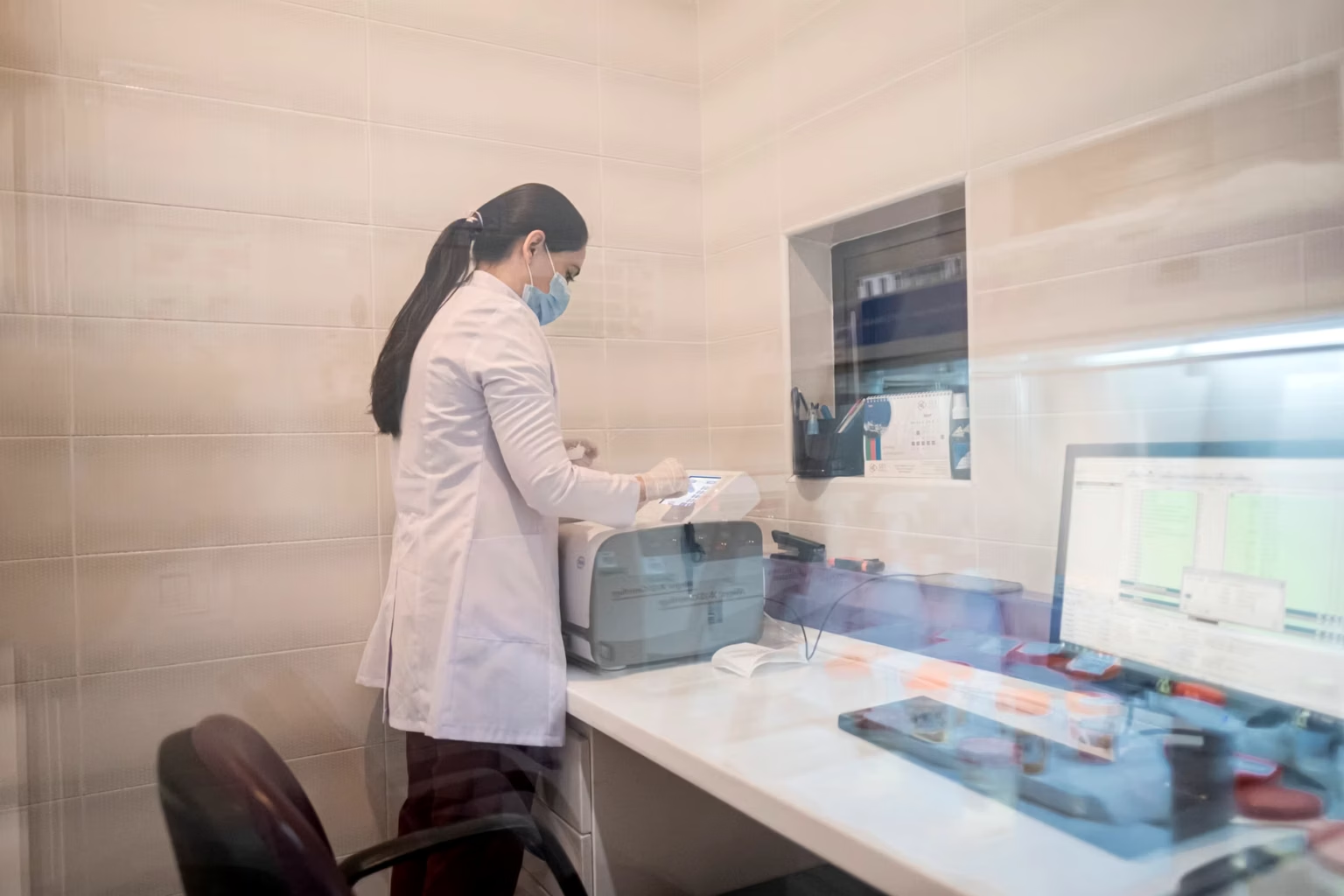
Aurenar, a St. Louis medical device startup, closed an oversubscribed $5.7 million seed round on July 28, 2026. The round was co-led by the Go Red for Women Venture Fund, part of American Heart Association Ventures, and Solas BioVentures. BJC Health and Kaleida Capital also participated.
The company develops the V-Link platform, a non-invasive, single-use device that delivers transauricular vagus nerve stimulation (taVNS). The device sends electrical signals through the ear to reduce the body’s inflammatory response in critically ill ICU patients. The FDA recently granted V-Link breakthrough device designation, a status that can accelerate regulatory review.
Proceeds will fund final device development, verification and validation testing, and FDA regulatory submissions ahead of pivotal clinical trials.
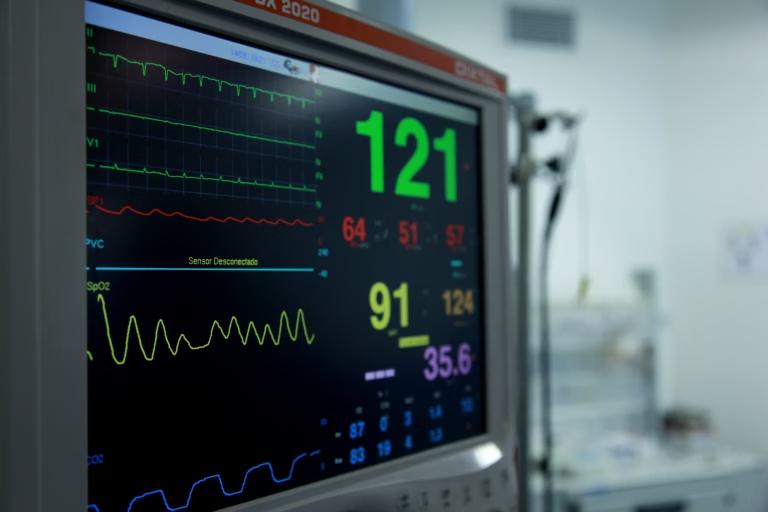
The Clinical Problem V-Link Targets
Aurenar’s primary focus is subarachnoid hemorrhage (SAH), a type of stroke caused by bleeding around the brain. SAH accounts for roughly 7% of all strokes worldwide. About 40% of survivors are left with permanent disability.
Inflammation worsens outcomes after SAH and other critical neurological events. When the brain is injured, the immune system’s response can cause additional damage. V-Link targets that cascade non-invasively, without surgery or implants.
The device was built on research from Dr. Eric Leuthardt and Dr. Anna Huguenard at Washington University School of Medicine in St. Louis. A randomized SAH trial showed that taVNS reduced moderate-to-severe vasospasm by more than 40% and lowered pro-inflammatory cytokines. Functional outcomes also improved. A companion analysis found a 20% drop in 30-day modifiable hospitalization costs tied to the method. A separate ischemic stroke trial showed consistent anti-inflammatory effects and a clean safety profile.
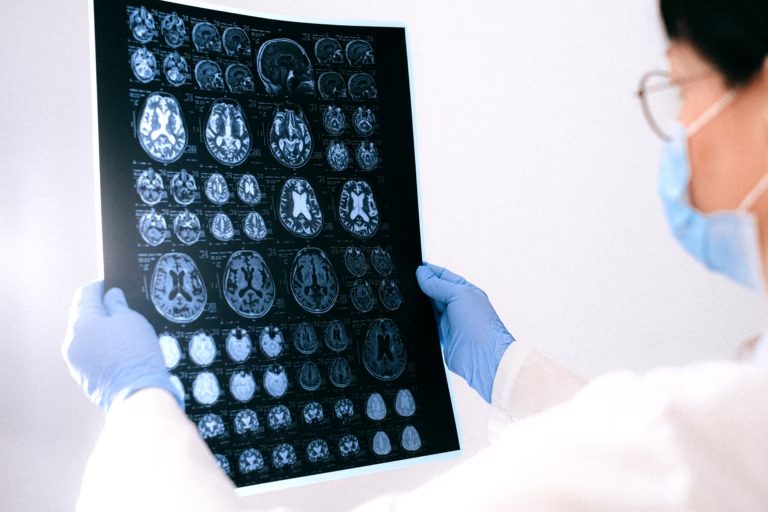
Why the Go Red for Women Fund Led This Round
The Go Red for Women Venture Fund focuses on cardiovascular and neurological conditions that disproportionately affect women. Stroke is a leading cause of mortality and long-term disability in women. Women also experience SAH at higher rates and often face worse outcomes after the event.
The fund’s decision to co-lead reflects that patient reality. Aurenar’s technology is not gender-specific, but the clinical burden it addresses falls unevenly on women.
V-Link’s wireless, simple design also supports faster clinical adoption. ICU physicians and nursing staff can use the device without extensive training, reducing barriers to deployment in high-pressure settings. Women-led and women-focused health funds have increasingly targeted this kind of underserved clinical gap, a pattern visible across new funding programs for women-led startups in health and tech alike.
The oversubscribed round suggests the investment case was compelling to multiple health-focused investors. The funding gap for women-focused ventures remains a documented challenge. Closing a seed round at this size, with institutional co-leadership, positions Aurenar to move quickly toward regulatory milestones. How the company performs in pivotal trials will determine whether V-Link reaches the ICU patients who need it most.
Aurenar also notes that V-Link may expand into other high-impact indications for critically ill patients beyond its initial stroke focus. The next concrete milestone is FDA regulatory submission.
Frequently asked questions
What key development does the report titled "Aurenar Raises $5.7M to Advance Ear-Based Vagus Nerve Device for ICU Stroke Care" describe?
Aurenar, a St. Louis medical device startup, closed an oversubscribed $5.7 million seed round on July 28, 2026.
Why is the change in the report titled "Aurenar Raises $5.7M to Advance Ear-Based Vagus Nerve Device for ICU Stroke Care" significant in its broader context?
The round was co-led by the Go Red for Women Venture Fund, part of American Heart Association Ventures, and Solas BioVentures.
What background does the report titled "Aurenar Raises $5.7M to Advance Ear-Based Vagus Nerve Device for ICU Stroke Care" provide about the change?
The company develops the V-Link platform, a non-invasive, single-use device that delivers transauricular vagus nerve stimulation (taVNS).
What broader implications does the report titled "Aurenar Raises $5.7M to Advance Ear-Based Vagus Nerve Device for ICU Stroke Care" identify?
The device sends electrical signals through the ear to reduce the body’s inflammatory response in critically ill ICU patients.