
The 10th Africa for Africa Women’s Conference opens this week in East London, South Africa, bringing together business leaders, policymakers, and young innovators for a three-day summit at the East London International Convention Centre. The event marks a decade of promoting women’s leadership across the continent, with a sharpened focus on entrepreneurship and youth development.
Founder and president Nombulelo Bea Hackula said the conference has grown well beyond its early gatherings. One of the first editions drew delegates from only three African countries. The organization now has representation in all five African Union regions and in the diaspora.
Entrepreneurship and the Youth Agenda
A central addition to this year’s programme is the relaunch of the Africa for Africa Young Entrepreneurs Network. Hackula said the initiative aims to build an entrepreneurial mindset among young Africans. Her argument is direct: Africa needs young people who create jobs, not simply seek them.
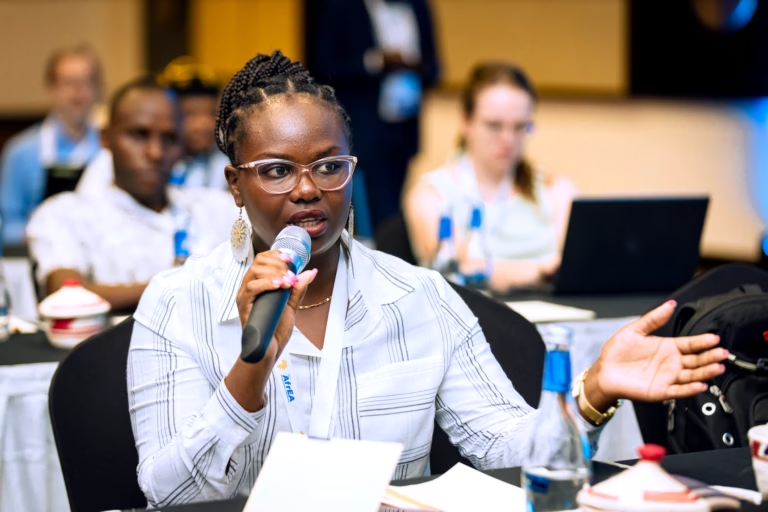
“If we start with young people who are innovative and have fresh ideas, we can build a critical mass of entrepreneurial minds across the African continent,” Hackula said. She linked the organization’s priorities to the African Union’s Agenda 2063 vision of a self-reliant Africa built on its own people, particularly women and youth.
The conference has also broadened its founding mission over the years. It launched to advance women’s leadership, but now actively promotes partnerships around gender equality and mutual respect. “We cannot perpetuate the discrimination that happened,” Hackula said. “We need to make sure there is mutual respect and gender equality.”
What the Programme Covers
The summit’s agenda spans several key areas. Organizers have scheduled a retrospective on the conference’s ten-year impact, panel discussions on sustainable development and climate resilience, and funding masterclasses for women entrepreneurs. Intergenerational mentorship sessions will connect experienced leaders with emerging professionals.

The event closes with a gala awards ceremony honoring African women who have made significant contributions in their fields. For context on how similar initiatives are broadening capital access for female founders across Africa, see reporting on female founder economics in Africa and persistent funding disparities that women-led ventures continue to face.
The conference also connects to a wider pattern of platforms building infrastructure around women’s business leadership. BusinessDay and Fernhill Digital, for instance, recently launched She Means Business, a business intelligence platform designed to document and amplify women’s economic leadership across Africa. Developments like these point to growing institutional demand for dedicated spaces, whether summits or media platforms, that move beyond symbolic representation toward practical support.
For the Africa for Africa conference, the test over the next decade will be whether the Young Entrepreneurs Network translates its relaunched mandate into measurable outcomes for the young Africans it aims to reach.
Frequently asked questions
What key development does the report titled "Africa for Africa Women's Conference Marks a Decade of Continental Leadership" describe?
The 10th Africa for Africa Women’s Conference opens this week in East London, South Africa, bringing together business leaders, policymakers, and young innovators for a three-day summit at the East London International Convention Centre.
Why is the change in the report titled "Africa for Africa Women's Conference Marks a Decade of Continental Leadership" significant in its broader context?
The event marks a decade of promoting women’s leadership across the continent, with a sharpened focus on entrepreneurship and youth development.
What background does the report titled "Africa for Africa Women's Conference Marks a Decade of Continental Leadership" provide about the change?
Founder and president Nombulelo Bea Hackula said the conference has grown well beyond its early gatherings.
What broader implications does the report titled "Africa for Africa Women's Conference Marks a Decade of Continental Leadership" identify?
One of the first editions drew delegates from only three African countries.